Garage Floor Coatings Guide for Michigan | Gordon Concrete Coatings
Your garage floor is one of the hardest-working surfaces in your home. It endures vehicle traffic, road salt, oil drips, heavy equipment, and Michigan's brutal freeze-thaw cycles—all while being expected to look decent. For most homeowners, the reality is a stained, pitted, cracking concrete slab that gets worse every year.
A professional garage floor coating changes everything.
Understanding Your Options
There are three main types of garage floor coatings, each with distinct advantages.
Solid color epoxy delivers a clean, uniform appearance at the most affordable price point. It's ideal for homeowners who want a polished, professional look without decorative elements. The seamless finish is easy to clean and resists stains, chemicals, and abrasion.
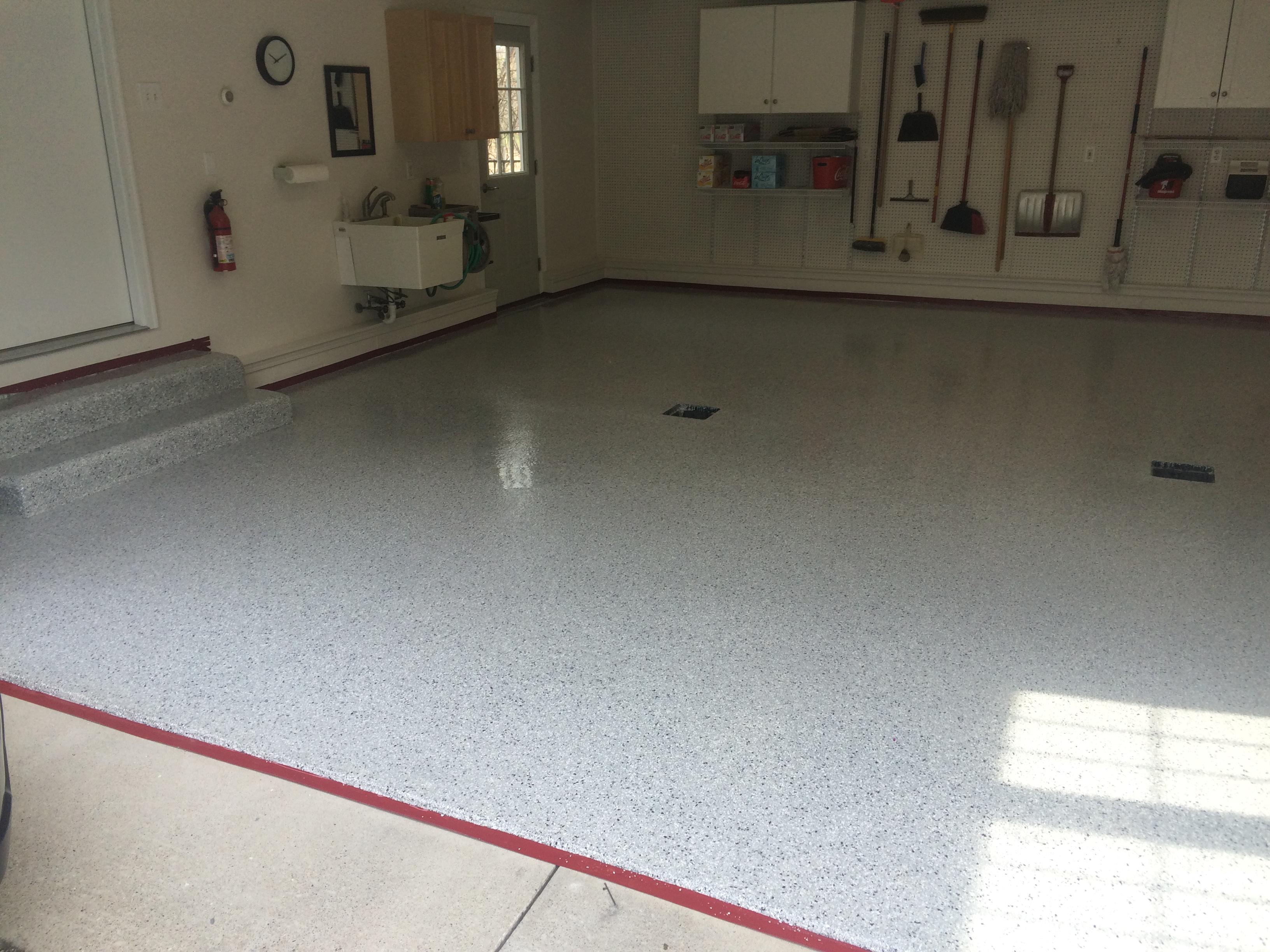
Vinyl flake epoxy incorporates colored flakes into the coating, creating a textured, multi-color surface. The flakes add visual interest while also providing natural slip resistance and helping to hide dirt between cleanings. This is the most popular choice for residential garages.
Polyaspartic coatings cure faster than traditional epoxy and offer superior UV stability and chemical resistance. Many professional installations use a polyaspartic topcoat over an epoxy base for the best of both worlds.
Why Michigan Garages Need Protection
Michigan's climate is uniquely punishing to concrete. Road salt tracked in by vehicles is hygroscopic—it attracts and holds moisture against the concrete surface. When temperatures drop, that moisture freezes and expands inside the concrete's pores. When it thaws, the cycle repeats. Over years, this freeze-thaw action causes spalling, pitting, and cracking that only accelerates with time.
A quality floor coating creates a non-porous barrier that prevents salt and moisture from ever reaching the concrete. Spills stay on the surface where they can be wiped away, and your concrete stays protected underneath.
The Installation Process
Professional installation typically takes one to two days for a standard two-car garage. The process begins with thorough surface preparation—diamond grinding opens the concrete's pores for maximum adhesion while removing any existing sealers, stains, or weak surface material. Cracks and joints are filled and repaired.
The coating system is then applied in layers: a primer or base coat, the color coat (with flakes broadcast if applicable), and a clear topcoat for durability and chemical resistance. Curing time varies by product, but most floors are ready for foot traffic within 24 hours and vehicle traffic within 48 hours.
Choosing a Contractor
Not all garage floor coatings are created equal. Big-box store DIY kits use thin, water-based formulas that often peel or yellow within a few years. Professional-grade coatings are thicker, more chemically resistant, and properly bonded through mechanical surface preparation.
When choosing a contractor, ask about their preparation process, the specific products they use, and their warranty. A company confident in their work will stand behind it.
Your garage floor has survived Michigan winters unprotected long enough. A professional coating transforms it into a durable, attractive surface that handles everything our climate throws at it—for decades to come.

.svg)